
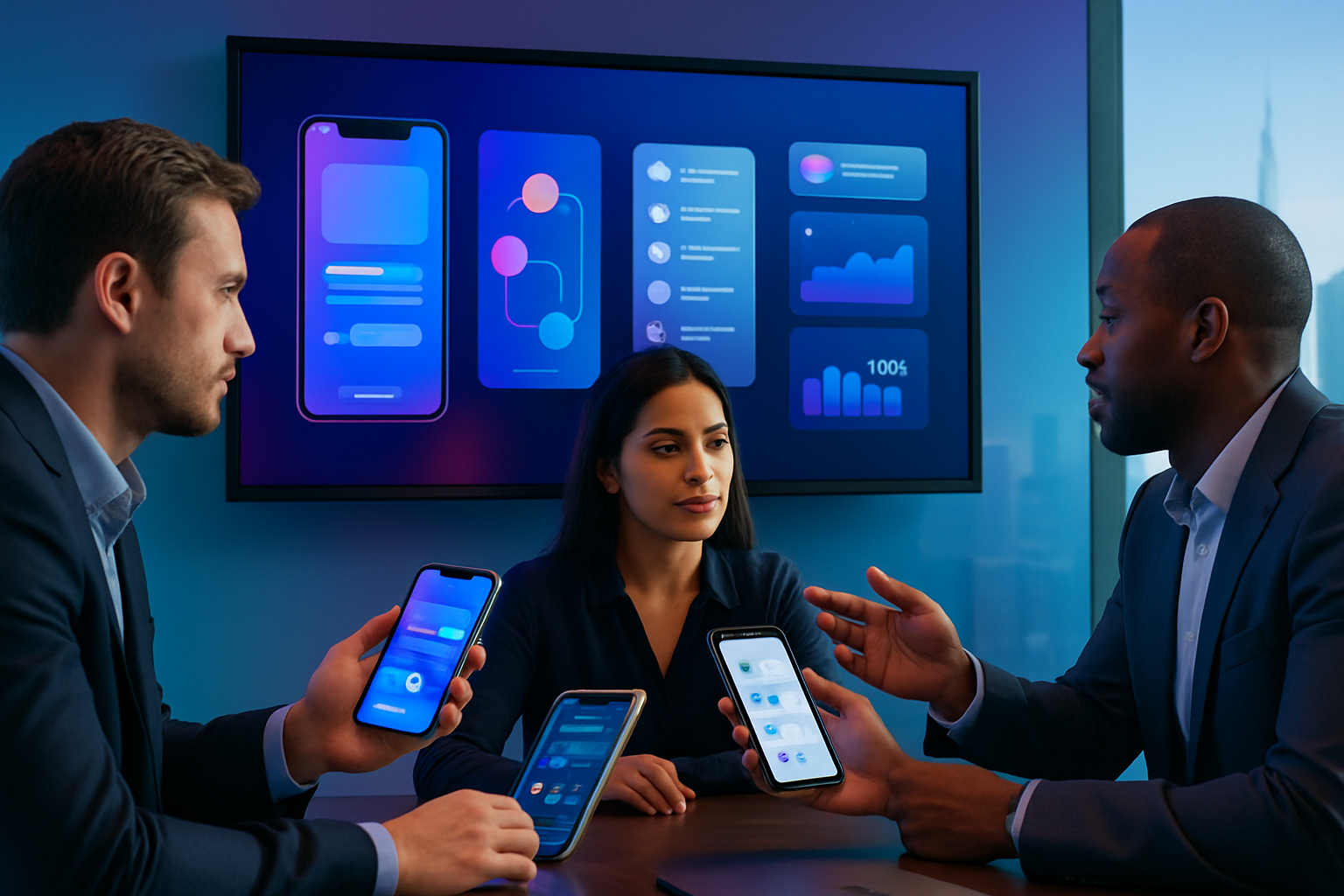
Top Mobile App Development Trends for Businesses in 2026
As the digital landscape continues to evolve, mobile app development trends are crucial for businesses aiming to enhance user engagement and streamline operations. In 2026, understanding these trends will empower organizations to leverage technology effectively, ensuring they remain competitive. Companies that adapt to these trends can expect increased user satisfaction and improved operational efficiency.
1. Artificial Intelligence Integration
Artificial intelligence (AI) is making significant inroads into mobile app development, providing businesses with tools to personalize user experiences and automate tasks. By 2026, over 50% of mobile apps are expected to leverage AI capabilities, according to Gartner. This trend not only enhances user engagement but also drives efficiency, allowing businesses to harness data for smarter decision-making.
2. 5G Technology Adoption
The rollout of 5G technology is set to transform mobile app performance, providing faster data speeds and more reliable connections. By 2026, it is estimated that 5G will account for 45% of global mobile connections (Statista). Businesses adopting 5G capabilities will benefit from smoother user experiences, particularly in areas such as streaming, gaming, and real-time data analytics.
3. Internet of Things (IoT) Integration
The integration of IoT with mobile applications is a growing trend, enabling seamless communication between devices. By 2026, the number of IoT devices is projected to exceed 75 billion globally (McKinsey). This connectivity allows businesses to collect real-time data, enhance customer interactions, and streamline operations, making IoT a critical component of modern mobile app development.
4. Cross-Platform Development
Cross-platform development frameworks are gaining traction, allowing businesses to create applications that run on multiple operating systems from a single codebase. This approach reduces development costs and time to market, making it an attractive option for organizations in 2026. With tools like Flutter and React Native, businesses can deliver consistent experiences across platforms efficiently.
5. Enhanced User Privacy Features
With increasing concerns about data privacy, businesses are prioritizing enhanced privacy features in their mobile applications. Regulations such as GDPR and CCPA have set high standards for user data protection. By 2026, it is expected that apps focusing on user privacy will gain a competitive edge, as 70% of users express a desire for better data protection (WeForum). This trend emphasizes the importance of transparency and security in app development.
6. Augmented Reality (AR) and Virtual Reality (VR)
AR and VR technologies are reshaping how users interact with mobile applications, particularly in sectors like retail and real estate. By 2026, the AR and VR market is expected to reach $300 billion (HBR). Businesses incorporating these technologies can create immersive experiences, enhancing customer engagement and driving sales through innovative applications.
7. Blockchain Technology
Blockchain technology is increasingly being utilized in mobile app development to enhance security, transparency, and trust. By 2026, industry adoption of blockchain solutions is projected to grow significantly, particularly in sectors such as finance and supply chain management (Gartner). This trend offers businesses a way to secure transactions and protect sensitive data, making it an essential consideration for modern app development.
8. Cloud-Based Solutions
Cloud computing is revolutionizing mobile app development by providing scalable resources and facilitating collaboration across teams. By 2026, over 90% of enterprises are expected to rely on cloud services for their app development processes (Statista). Cloud-based solutions allow businesses to reduce infrastructure costs while enhancing flexibility and scalability, making them a vital component of app development strategy.
9. Low-Code and No-Code Development
Low-code and no-code development platforms are democratizing app development, enabling non-technical users to create applications with minimal coding knowledge. By 2026, it is projected that organizations utilizing these platforms will see a 50% increase in app delivery speed (McKinsey). This trend allows businesses to innovate rapidly and efficiently without relying solely on traditional development resources.
10. Voice-Enabled Apps
Voice technology is becoming increasingly integrated into mobile applications, allowing users to interact through voice commands. By 2026, it is estimated that over 30% of mobile interactions will be via voice (Statista). Businesses that implement voice-enabled features can enhance accessibility and improve user experience, appealing to a broader audience.
Conclusion
Staying ahead of mobile app development trends is imperative for businesses looking to enhance user engagement and streamline operations in 2026. By adopting technologies such as AI, IoT, and blockchain, companies can not only improve their app functionality but also build stronger relationships with their users. To ensure your business is well-positioned in this competitive landscape, consider partnering with experts in mobile development. Learn more about how PyraMindz can assist your mobile app development needs.
FAQ
Key trends include artificial intelligence integration, 5G technology adoption, IoT integration, and enhanced user privacy features. These trends are shaping how businesses engage with users and optimize their operations.
By embracing these mobile app development trends, businesses can enhance user experiences, improve operational efficiency, and maintain a competitive edge in their respective industries.
While not all businesses may require a mobile app, those that do can significantly benefit from adopting relevant trends to improve user engagement and streamline their processes. Ignoring these trends may hinder growth and innovation.