
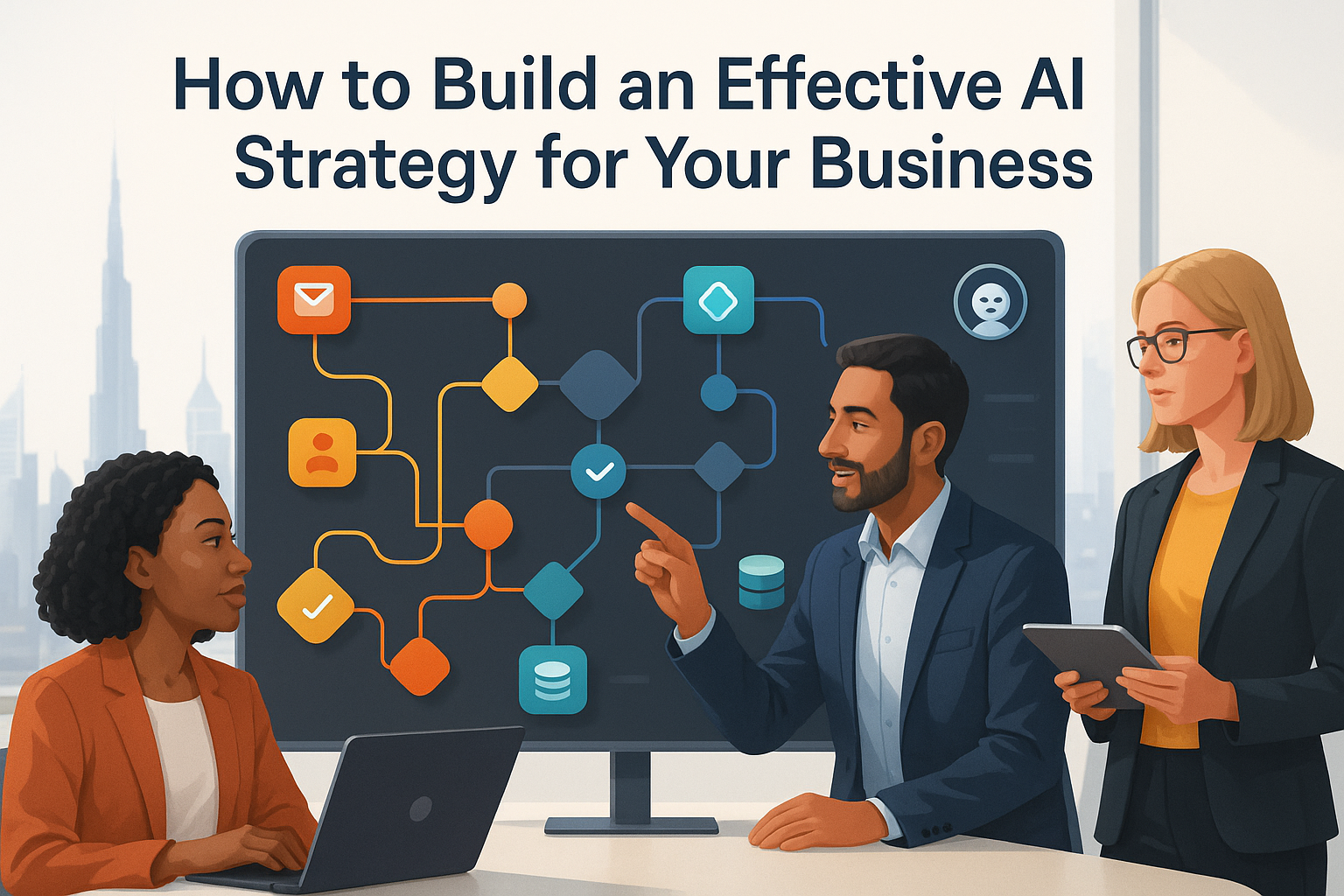
How to Build an Effective AI Strategy for Your Business
In today’s rapidly evolving business landscape, developing a robust AI strategy is crucial for staying competitive. An effective AI strategy can streamline operations, enhance customer experiences, and drive innovation. This guide will provide you with actionable steps to create an AI strategy that aligns with your business goals, ensuring a smooth integration of AI technologies into your operations.
What You Need
- Understanding of your business objectives
- Access to relevant data sources
- Basic knowledge of AI technologies
- Collaboration tools and project management software
Step 1: Define Your Business Goals
Start by identifying the specific challenges you want to address with AI. Are you looking to improve customer service, increase operational efficiency, or enhance product offerings? Establishing clear objectives will guide the rest of your AI strategy development. Pro Tip: Use the SMART criteria (Specific, Measurable, Achievable, Relevant, Time-bound) to refine your goals.
Step 2: Assess Your Current Capabilities
Evaluate your existing technology infrastructure, data management practices, and workforce skills. This assessment will help you identify gaps that need to be filled to successfully implement AI solutions. Pro Tip: Consider conducting a SWOT analysis (Strengths, Weaknesses, Opportunities, Threats) to gain a comprehensive view of your current capabilities.
Step 3: Identify Relevant AI Use Cases
Research and shortlist AI applications that align with your business goals. Common use cases include predictive analytics, customer segmentation, and automation of repetitive tasks. Prioritize these based on potential impact and feasibility. Pro Tip: Collaborate with stakeholders from different departments to gather diverse insights and foster cross-functional support.
Step 4: Develop a Data Strategy
Data is the backbone of any AI initiative. Determine what data you need, how to collect it, and how to ensure its quality and security. Establishing a robust data governance framework will help you manage data effectively. Pro Tip: Leverage cloud-based data storage solutions to enhance accessibility and scalability.
Step 5: Choose the Right AI Tools and Technologies
Select AI tools that best fit your identified use cases. Consider factors such as ease of use, integration capabilities, and scalability. It’s essential to choose technologies that can grow with your business. Pro Tip: Evaluate both off-the-shelf solutions and custom-built applications to find the best fit for your needs.
Step 6: Build a Cross-Functional Team
Assemble a team with diverse skills, including data scientists, IT professionals, and domain experts. This multidisciplinary approach will ensure a comprehensive understanding of AI implementation across various business functions. Pro Tip: Encourage continuous learning and professional development to keep your team updated on AI advancements.
Step 7: Pilot Your AI Initiatives
Before full-scale implementation, run pilot projects to test the effectiveness of your AI applications. Use these pilots to gather feedback, assess performance, and make necessary adjustments. Pro Tip: Set clear metrics for success to evaluate the pilot’s impact and scalability potential.
Step 8: Monitor, Evaluate, and Iterate
After implementation, continuously monitor the performance of your AI solutions. Collect data on outcomes and user feedback to evaluate effectiveness. Use this information to iterate and improve your AI strategy over time. Pro Tip: Schedule regular strategy reviews to ensure alignment with evolving business goals.
Common Pitfalls to Avoid
- Neglecting data quality and governance
- Overlooking the importance of employee training and buy-in
- Failing to align AI initiatives with business objectives
- Rushing into implementation without adequate testing
Pro Tips
- Consider integrating AI with IoT devices to enhance data collection and insights.
- Stay informed about emerging trends in AI and adjust your strategy accordingly.
- Foster a culture of innovation where employees feel empowered to propose AI-driven solutions.
- Explore partnerships with AI experts or consultancy firms for additional guidance.
FAQ
The first step is to define your business goals clearly. Understanding the challenges you aim to address will guide the entire strategy development process.
Evaluate your existing technology infrastructure, data management practices, and the skills of your workforce. Conducting a SWOT analysis can provide a comprehensive overview.
Common use cases include predictive analytics, customer segmentation, automation of repetitive tasks, and enhancing customer service through AI-driven solutions.
Data quality is crucial as it directly impacts the effectiveness of AI solutions. Establishing a robust data governance framework ensures that your data is accurate, secure, and reliable.
Conclusion
Building an effective AI strategy is a critical step towards achieving long-term business success. By following the outlined steps, you can develop a comprehensive AI strategy that aligns with your business goals and drives growth. For tailored support in your AI journey, consider partnering with PyraMindz. Our expertise in Artificial Intelligence and technology implementation can help you simplify, automate, and scale your operations effectively.